Hollywood-style PR cannot mask Washington’s strategic defeat in Iran skies
TEHRAN — The administration of US President Donald Trump has increasingly resorted to Hollywood-style public relations campaigns in a desperate bid to manufacture a false sense of victory over Iran, seeking to gloss over the catastrophic failure of its military adventurism against the Islamic Republic.
Washington’s latest attempt to engineer a cinematic narrative out of an operational humiliation came to light after a CNN report revealed that the Pentagon pressured two US Air Force crewmen—whose F-15E Strike Eagle was shot down deep within Iranian territory—to participate in a curated interview with CBS’s “60 Minutes.”
According to the report, the two airmen initially resisted the media stunt, expressing grave reservations that they were effectively being coerced into participating by top political brass. However, US Secretary of War Pete Hegseth and other high-ranking political appointees at the Pentagon aggressively pushed for the broadcast to sanitize the reality of the battlefield.
CBS noted that the airman who ultimately agreed to appear—identified only by the callsign “Bravo”—was the downed aircraft’s weapons systems officer, holding the rank of colonel, who spent roughly two days stranded alone in the rugged Iranian terrain. CNN acknowledged that the coercive push exposes how Hegseth and the Trump administration have been maneuvering to manipulate the narrative surrounding an increasingly unpopular and costly war with Iran, using a sensationalized survival tale to distract from severe military setbacks.
The incident stems from the downing of the multi-million-dollar F-15E Strike Eagle on April 3, following the unprovoked military aggression launched by the United States and Israel on February 28.
The precision interception of the advanced US warplane by Iran’s indigenous air defense networks delivered a profound strategic blow to the Pentagon, shattering the long-promoted myth of Western aerial supremacy over sovereign Iranian airspace. The downing demonstrated the high readiness and lethal accuracy of Iran’s integrated defense umbrella, forcing Washington into a chaotic and vulnerable posture.
Both crew members ejected from the doomed aircraft. While the pilot was extracted in the immediate hours following the crash, the weapons systems officer remained trapped deep inside Iranian territory for over 36 hours as US forces mounted a high-risk rescue operation under the constant threat of Iranian tracking.
Far from the heroic triumph Washington’s PR machine is attempting to market, the rescue mission itself nearly devolved into a catastrophic debacle reminiscent of past American military misadventures in the region.
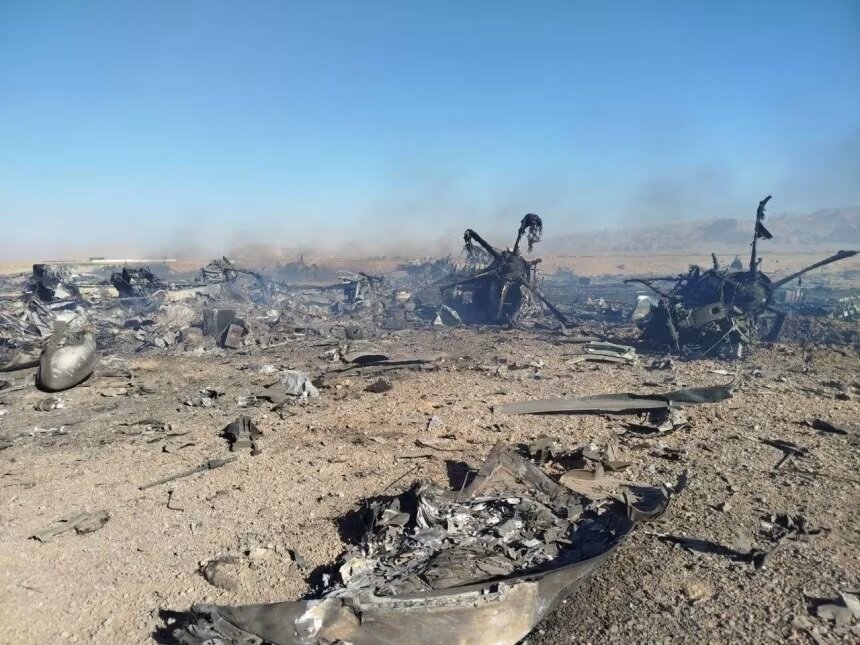
Two US transport aircraft dispatched to extract the airman and special operations personnel became immobilized at a remote airstrip. Facing imminent capture and exposed to Iranian reconnaissance, US forces said they were forced to scuttle and blow up their own stranded aircraft to prevent advanced military hardware and sensitive technology from falling into the hands of the Iranian Armed Forces, before scrambling replacement planes to complete the evacuation.
Political analysts view the Pentagon’s orchestration of the 60 Minutes broadcast as a textbook diversionary tactic. By shifting public attention toward the individual survival drama of a stranded officer, Washington hopes to divert Western public scrutiny from the broader strategic failure that, despite billions of dollars in military expenditure, US assets remain acutely vulnerable to Iran’s deterrence capabilities.
As Washington’s military objectives hit a solid wall of Iranian resistance, the Trump administration’s reliance on manufactured heroics only underscores the growing gap between Pentagon propaganda and the harsh realities of the battlefield.
Leave a Comment